


Why I Built Hejme, Part 3: Families Define Themselves
First published at Tuesday, 27 January 2026
Why I Built Hejme, Part 3: Families Define Themselves
I'm in a boringly traditional marriage. One wife, one daughter, one household. We've been together for years. No divorce, no blended family, no complex custody arrangements.
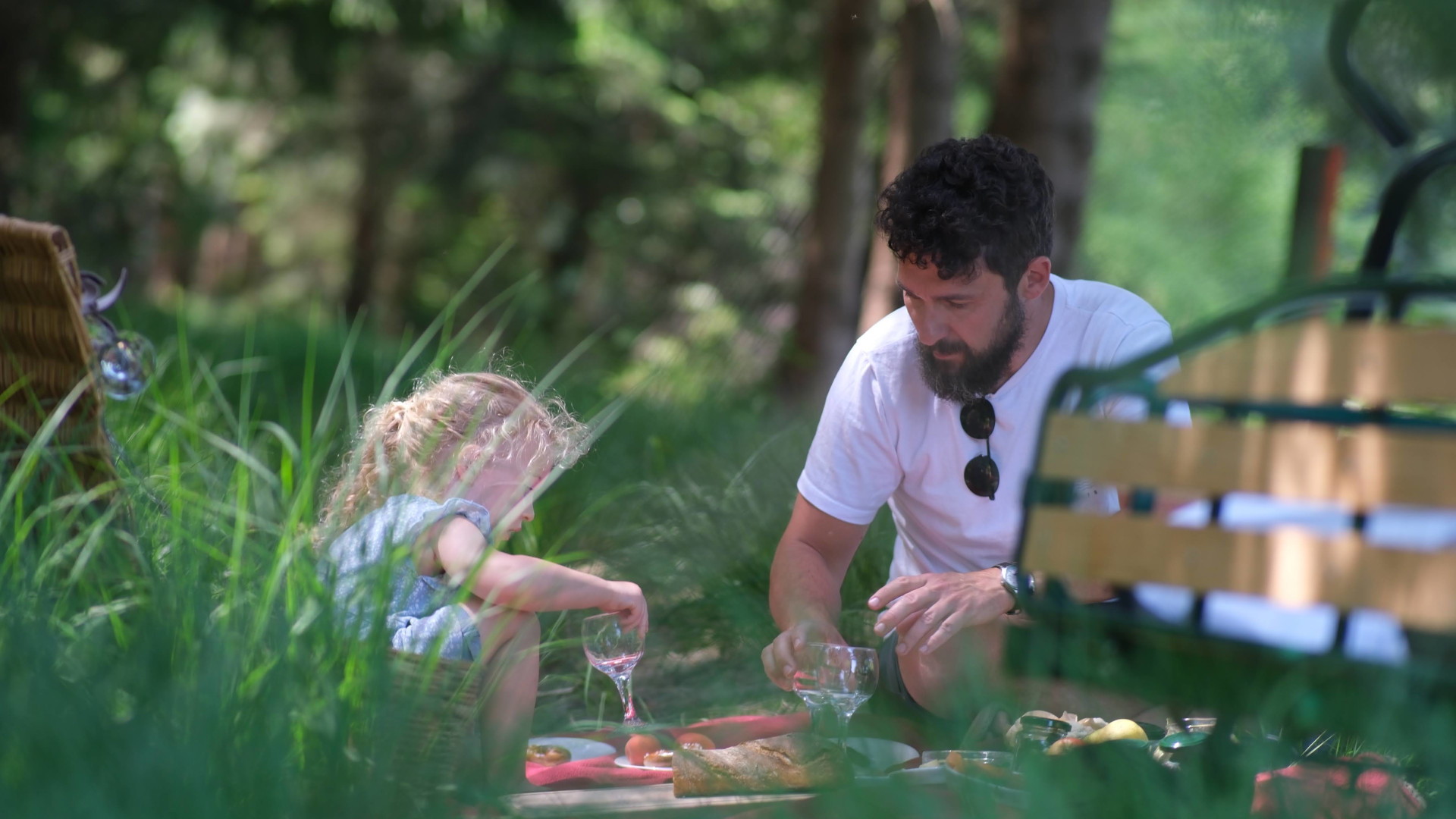 Kore and Eline having a picknick in the woods
So why did I build a platform with sophisticated permission systems designed for exactly those situations?
Because I talked to people who live them.
Friends navigating co-parenting after divorce, trying to share photos of their kids with both sides of the family without the wrong people seeing the wrong things. Colleagues managing blended families where "who sees what" is a constant negotiation. Parents who want to share with grandparents but not with their ex-spouse. Stepparents trying to figure out where they fit in the family photo hierarchy.
These conversations convinced me the problem is real and underserved. But I haven't lived it myself. I'm building from empathy and research.
My own problem is simpler: distance.
My brother lives four hours away. My parents, one hour. My wife's family is scattered across the country. We're not complicated, we're just far apart.
I want my parents to see their granddaughter's daily life without me posting her publicly. I want my brother to know what's happening with us without waiting for the next visit.
My use case is geographic distance.
But I built Hejme for both. Because I kept hearing the same underlying need from everyone I talked to: let me share with exactly the humans I choose, instead of "friends", "public", or some platform's idea of what my family looks like.
If you're navigating a complex family structure, divorced, blended, complicated in ways I haven't imagined: I want to hear from you. Tell me what I'm getting wrong. I'd rather learn now than build something that doesn't work for the people who need it most.
A close friend of my wife has been part of our lives for years. She's there for birthdays, holidays, random weekday dinners. My daughter calls her "aunt."
She's not related to us by blood or marriage. On most platforms, she wouldn't count as "family." The family tree templates don't have a box for "chosen family" or "the friend who became an aunt through years of showing up."
On Hejme, she's in our inner circle. Because we decided she is.
This is the core philosophy I built around: families don't fit a template or a database schema with predefined fields like "two parents, two children, four grandparents, done."
Families are divorced parents who still coordinate around their children. Blended households where stepparents and biological parents share space. Grandparents raising grandchildren. Aunts and uncles who are more present than parents. Chosen family who showed up when blood relatives didn't.
The platform shouldn't tell you who your family is. You tell the platform.
That's why Hejme uses circles instead of family trees. You create and name them, and you decide who belongs. "Immediate family." "Grandparents." "The neighbours we trust." "School parents." "The people who get the silly photos." Whatever structure reflects your actual life.
There's no "correct" configuration and no validation error when your family doesn't match someone's assumptions.
I started this series with a photo of my daughter that you've never seen, her back to the camera, running across sand dunes, her shadow stretching toward mine. I chose that photo deliberately. It shows nothing of her face and nothing she hasn't consented to share. I'm not anti-sharing. I just believe some things belong to some people and not to everyone.
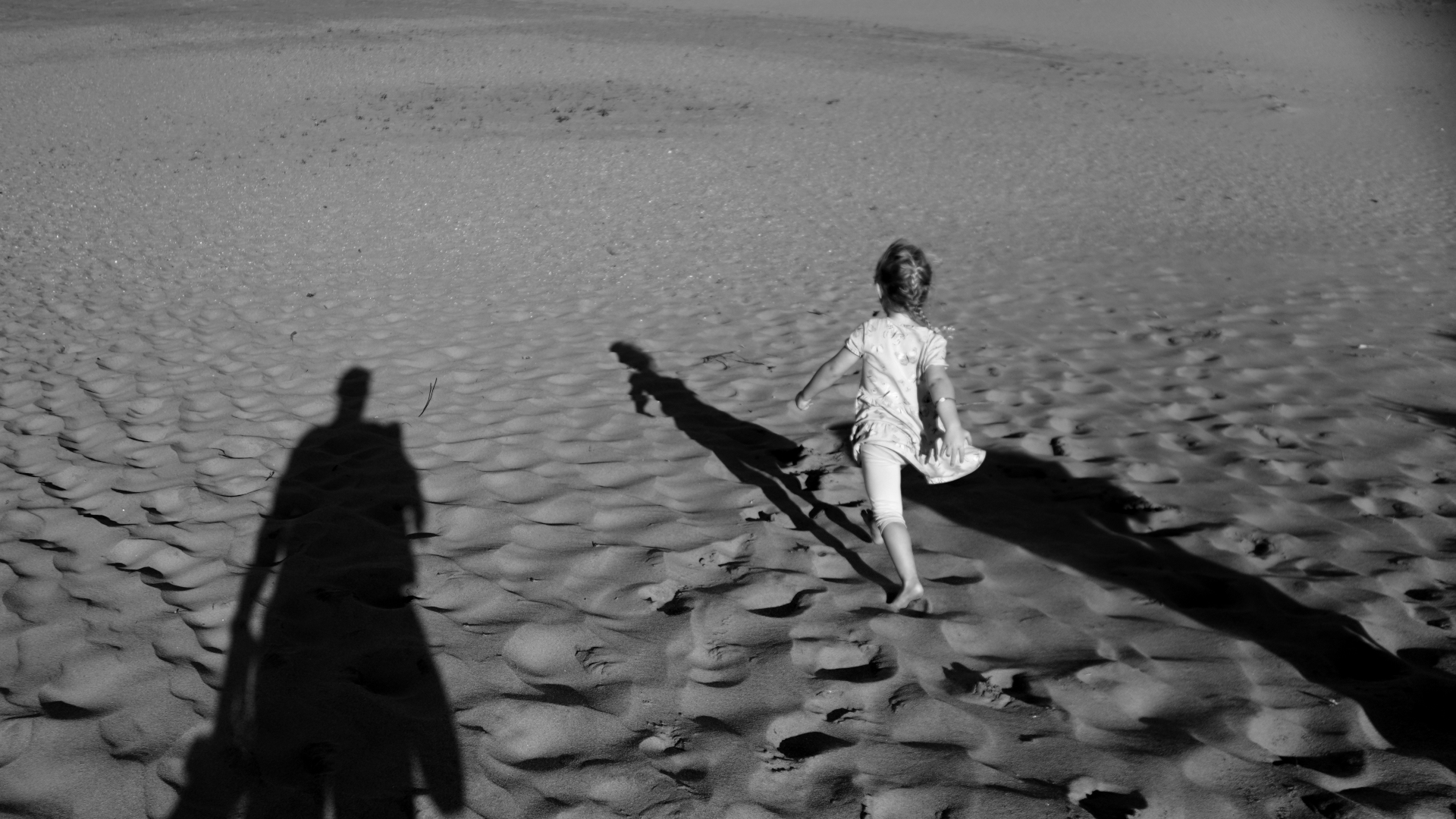 Kid running away from the camera on an empty beach. Shadows of her parents stretching in the sun
She'll decide later what becomes public. That's her right. And you decide who your family is.
I built Hejme around those two ideas: private sharing with exactly the people you choose, without algorithms, ads, or strangers harvesting your moments for profit.
If this resonates, Hejme is in early access at https://hejme.eu.
Subscribe to updates
There are multiple ways to stay updated with new posts on my blog:
