


Fast Fashion for Code: How the Power Grab Masks a Quality Crisis
First published at Tuesday, 31 March 2026
Fast Fashion for Code: How the Power Grab Masks a Quality Crisis
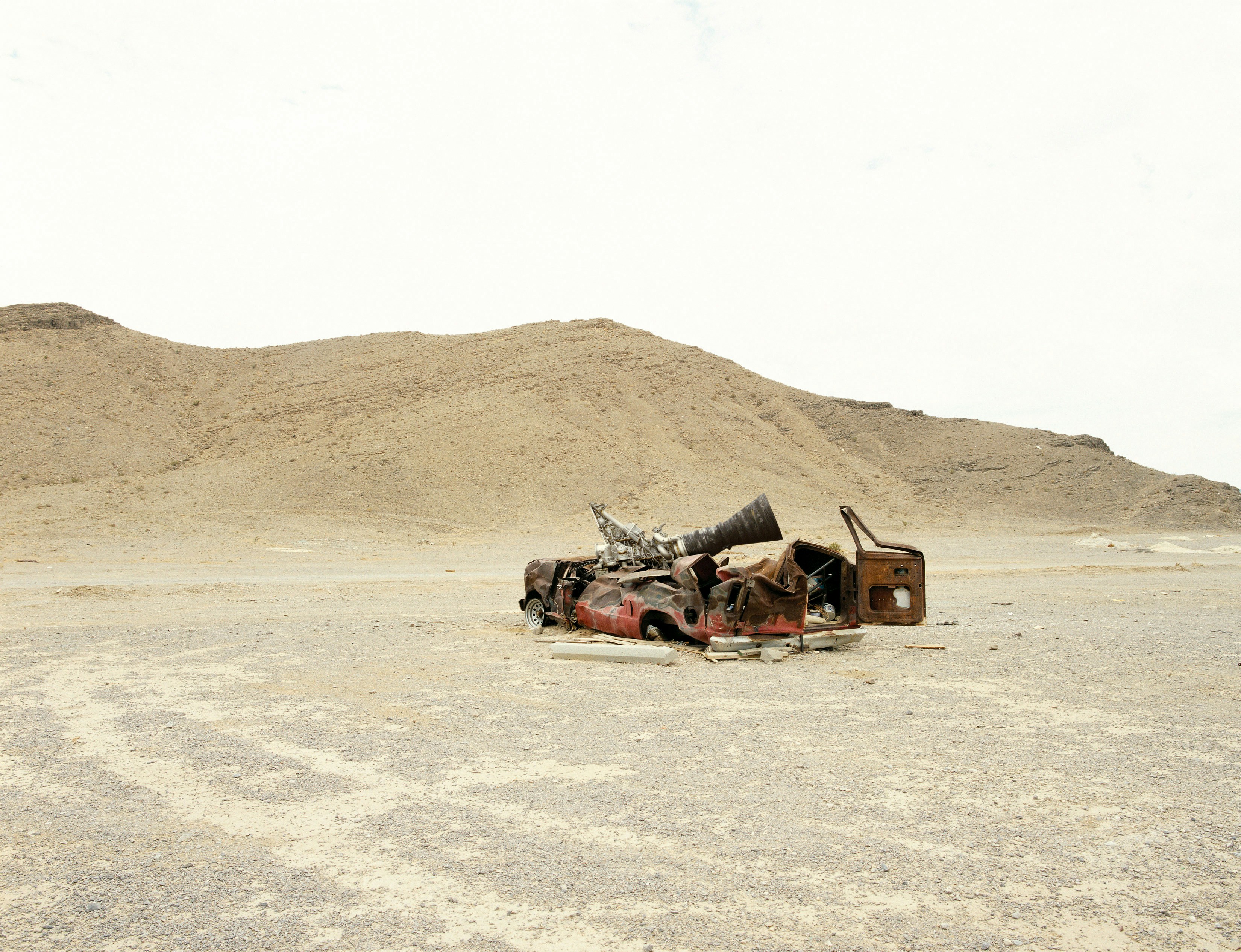 A rocket engine and a crashed car in a desert
Photo by Gabriel Jones on Unsplash
After decades of slowly accumulating technical debt, AI code generation has arrived, and it accelerates everything. Vendors promise the industrialization of software development. What we get is something far more familiar: fast fashion [1] .
- 1
- Credit to Samir Talwar (https://functional.computer/) for the "fast fashion for code" metaphor that frames this essay. tante independently arrived at the same metaphor in "Software as Fast Fashion" (January 2026, https://tante.cc/2026/01/15/software-as-fast-fashion/), which is worth reading alongside this piece.
Underneath the quality crisis lies a structural shift in power that may lock in this degradation permanently.
The Primark problem
Think about how fast fashion works. Cheap materials. Rapid production. Wear it twice, throw it away. Ignore the externalities: environmental waste, exploitative labor, disposal culture. Optimize only for speed and cost.
Now look at what's happening with AI-generated code.
Across 211 million changed lines of code from 2020 to 2024, GitClear reports an 8× rise in 5+-line duplicate blocks and a drop in refactoring ('moved' lines), a shift away from reuse toward copy/paste patterns [2] . One technology veteran with 35 years of experience observed he had never seen so much technical debt created in such a short period [3] .
- 2
- GitClear's 2025 report (211M changed lines, 2020-2024) found an 8× rise in 5+-line duplicates and a multi-year decline in 'moved' lines. "How AI generated code compounds technical debt," LeadDev, August 2025. https://leaddev.com/technical-direction/how-ai-generated-code-accelerates-technical-debt
- 3
- GitClear's second-annual AI Copilot Code Quality research. "How AI generated code compounds technical debt," LeadDev, August 2025. https://leaddev.com/technical-direction/how-ai-generated-code-accelerates-technical-debt
Generating software is now as cheap and easy as buying clothes at Primark. And just like fast fashion, we're ignoring all the externalised costs.
The original sin: we never built the standards
Software engineering has been broken from the start. While our colleagues in civil, mechanical, and electrical engineering developed rigorous professional standards, licensing requirements, and accountability mechanisms over decades, software took a different path.
Software still has no widely adopted licensure regime. In the U.S., the National Council of Examiners for Engineering and Surveying (NCEES) ended the software Professional Engineer exam in 2019 for lack of demand [4] . In traditional infrastructure, failures can and do lead to criminal trials (e.g., Genoa's Morandi Bridge: 43 fatalities; 18 first-instance convictions in 2024, with related proceedings ongoing) [5] . When software systems fail? Data breach fines are rounding errors. Nobody faces real consequences.
- 4
- NCEES discontinued the U.S. PE exam in Software Engineering after April 2019. National Council of Examiners for Engineering and Surveying. https://ncees.org/ncees-discontinuing-pe-software-engineering-exam/; National Society of Professional Engineers. https://www.nspe.org/career-growth/pe-magazine/may-2018/ncees-ends-software-engineering-pe-exam
- 5
- 2018 collapse (43 deaths); 2024 first-instance convictions for 18 managers; related 2025 trial strand ongoing. "Second Morandi Bridge collapse trial begins in Genoa," Trasporto Europa, January 2025. https://www.trasportoeuropa.it/english/second-morandi-bridge-collapse-trial-begins-in-genoa/
Research examining software companies found an absence of industry practices, professional responsibility code of conduct standards, and guidelines for integrating ethical concerns, with almost all companies having no identification methods for ethical considerations [6] .
- 6
- "Ethical Issues in Software Requirements Engineering," MDPI, February 2022. https://www.mdpi.com/2674-113X/1/1/3
We should have created developer-focused unions while we had power and leverage. We should have established professional standards. We should have demanded accountability. We didn't. Now that leverage is evaporating.
The slow rot we normalized
Even before large language models (LLMs) arrived, software quality was degrading. Research shows that internal quality issues often exist from the moment a file is first checked into version control, and without active measures, these issues worsen over time [7] .
- 7
- "How to Tackle Technical Debt and Maintain High Software Quality," Qt.io, January 2025. https://www.qt.io/quality-assurance/blog/how-to-tackle-technical-debt; "Technical Debt and Software Erosion," Qt.io. https://www.qt.io/quality-assurance/axivion/technical-debt
We've known about this for decades. Google's engineering satisfaction surveys found no single metric predicts technical debt, identifying common problem areas including dependencies, code quality, migration, and code degradation [8] .
- 8
- Google EngSat/IEEE Software column (Jaspan & Green, 2025). IEEE Xplore. https://ieeexplore.ieee.org/ielx8/52/11316879/11316905.pdf?arnumber=11316905&isnumber=11316879; "Measuring Developer Productivity Per Google's Research," ShiftMag. https://shiftmag.dev/measuring-developer-productivity-per-googles-research-3739/
But without professional standards or accountability, the industry optimized for speed. Ship fast, break things, accumulate debt. We told ourselves it was innovation, while we were slowly filling landfills.
The LLM acceleration: fast fashion goes digital
Then LLMs arrived, and everything accelerated.
Multiple studies paint a consistent picture: LLMs generate code that often passes functional tests but systematically lacks non-functional qualities. Research shows maintainability is under-examined, with improvements in one quality often degrading another [9] . Developers writing code by hand produce output that more consistently follows coding standards than GPT-4, which tends toward more complex implementations despite passing more tests in some tasks [10] . Analysis of 4,442 Java tasks found bugs, security vulnerabilities, and code smells common across all major models [11] .
- 9
- Review + empirical study: maintainability is under-examined; improvements in one quality often degrade another. "Quality Assurance of LLM-generated Code: Addressing Non-Functional Quality Characteristics," arXiv, November 2025. https://arxiv.org/html/2511.10271v1
- 10
- Study across 72 tasks: human code better adheres to coding standards; GPT-4 often more complex, though passes more tests in some tasks. "Comparing Human and LLM Generated Code: The Jury is Still Out!" arXiv, January 2025. https://arxiv.org/abs/2501.16857
- 11
- Sonar analysis of 4,442 Java tasks shows bugs, security vulnerabilities, and smells common across models. "Assessing the Quality and Security of AI-Generated Code," arXiv, August 2025. https://arxiv.org/html/2508.14727v1
The code works, in the same way a $5 shirt from Primark technically functions as clothing.
Academic reviews consistently associate code cloning with higher maintenance cost and defect risk, especially when cloned blocks must be updated across multiple locations [12] . Analysis shows developers are now less likely to reuse previous work, leading to more redundant systems [13] .
- 12
- Systematic review/meta-analysis of code cloning and defect risk. "Code Clone Detection: A Systematic Review and Meta-Analysis," arXiv, June 2023. https://arxiv.org/abs/2306.16171
- 13
- "How AI generated code compounds technical debt," LeadDev, August 2025. https://leaddev.com/technical-direction/how-ai-generated-code-accelerates-technical-debt
LLM vendors like Anthropic and OpenAI are shifting the power of creation to businesses. Industrialization of software development? We already had that. This is the fast-fashionization of software generation: more disposable code of lower quality, thrown against the wall to see what sticks.
The expertise pipeline is breaking
A less visible consequence may do even more damage: LLMs are hollowing out the pipeline that produces competent software engineers.
Learning to build software has always required doing the unglamorous work first. Debugging a race condition teaches you things about concurrency that no tutorial can. Untangling a poorly designed schema teaches you why data modelling matters. This work is where expertise comes from. Every senior engineer's judgment was built on years of wrestling with exactly the kinds of problems that LLMs now shortcut past.
When junior developers generate code instead of writing it, they skip the struggle that builds understanding. They produce working output without developing the mental models that would let them evaluate, debug, or improve that output. The result is a generation of developers who can produce code but cannot reason about it.
This is already visible in adjacent fields. Aviation has studied the problem for decades: pilots who rely heavily on automation lose the manual flying proficiency that matters most when automated systems fail, a phenomenon researchers call 'deskilling', which has been a contributing factor in multiple fatal accidents [14] .
The pattern is now repeating across white-collar work more broadly. A survey by the market research firm IDC found that 66% of enterprises expect to slow entry-level hiring due to AI, while 69% report fewer on-the-job development opportunities for junior employees and 71% report increasing difficulty recruiting and training future leaders because entry-level learning pathways have disappeared [15] . You cannot run an optimised, AI-assisted engineering team if nobody on the team understands the fundamentals well enough to catch the AI's mistakes, and you cannot build that understanding by prompting an LLM.
- 14
- Growing reliance on cockpit automation has reduced manual flying practice, contributing to loss-of-control accidents; the FAA, EASA, and IATA have all issued guidance on rebalancing automation with manual skill retention. "Methods for Preventing the Degradation of Manual Flying Skills in an Automated Cockpit Environment," The Collegiate Aviation Review International, December 2025. https://ojs.library.okstate.edu/osu/index.php/CARI/article/view/10345; "Lost Skills," Flight Safety Foundation, June 2021. https://flightsafety.org/asw-article/lost-skills/
- 15
- IDC survey on behalf of Deel: 66% of enterprises expect to slow entry-level hiring; 69% report fewer development opportunities for juniors; 71% report difficulty training future leaders. "Enterprises are cutting back on entry-level roles for AI," IT Pro, November 2025. https://www.itpro.com/business/careers-and-training/enterprises-are-cutting-back-on-entry-level-roles-for-ai-and-its-going-to-create-a-nightmarish-future-skills-shortage
Today's juniors are tomorrow's seniors, the architects, the people who design the systems that LLMs will be asked to generate code for. If the pipeline that produces them is broken, no amount of AI capability can compensate. You end up with increasingly powerful code generation tools and nobody qualified to direct them. The dependency on LLM vendors becomes irreversible once the humans who could work without the tools no longer exist.
The structural lock-in: why this won't fix itself
The quality crisis and the eroding expertise pipeline are serious on their own. But they are symptoms of a deeper problem: a structural shift in power from the people who build software to the companies that control the means of generating it. Developers have historically held leverage because their skills were scarce and hard to replace. That leverage is now being transferred to a handful of corporations that own the LLM infrastructure everyone increasingly depends on.
The dependency trap
Training LLMs requires computational infrastructure, data access and expertise worth billions, so only massively funded companies can do it. Developers do not own OpenAI, Anthropic, Google or Microsoft models. We rent them as services from capital.
Your ability to be productive increasingly depends on access to models controlled by a handful of corporations. And as developers become less likely to reuse previous work and rely more on AI generation [16] , the dependency deepens.
- 16
- "How AI generated code compounds technical debt," LeadDev, August 2025. https://leaddev.com/technical-direction/how-ai-generated-code-accelerates-technical-debt
The leverage collapse
Individual developers are losing bargaining power at an accelerating rate. When your "skill" becomes knowing how to prompt an LLM that anyone can access, what leverage do you have? The companies that control the models hold all the cards.
We had a window of decades, and we made choices about licenses, unions and professional organization that gave away our power.
Look at open source. In 2015, the MIT license accounted for ~45% of licensed GitHub repos, version 2 of the GNU General Public License (GPL) for ~13% [17] . We chose permissive licenses that let companies extract value from our work without requiring anything back. We could have used copyleft licenses that demand reciprocity, like the GPL, the GNU Affero General Public License (AGPL) or the European Union Public Licence (EUPL). We chose "maximizing adoption", which really meant maximizing capital's ability to profit from our labor.
- 17
- GitHub's 2015 analysis of licensed public repos. "Open source license usage on GitHub.com," GitHub Blog, March 2015. https://github.blog/open-source/open-source-license-usage-on-github-com/; GitHub Innovation Graph. https://innovationgraph.github.com/global-metrics/licenses
And now? Research investigating code license infringements in LLM training datasets found significant concerns about the legal implications of using copyrighted data in large-scale training, with many datasets claiming to use only permissively licensed code while actually containing GPL and other copyleft code [18] . LLMs train on everything, ignoring licenses entirely. We gave away our leverage through our choices, and then capital took the rest anyway.
- 18
- "An Exploratory Investigation into Code License Infringements in Large Language Model Training Datasets," arXiv, March 2024. https://arxiv.org/html/2403.15230v1
Why capital won't fix this
Throughout the 1980s and 1990s, organized labor in North America and Western Europe was systematically disempowered as employers consolidated more flexible and lower wage labor markets [19] . In industry after industry, trucking, airlines, railroads, telecommunications, deregulation led to erosion of wages and working conditions as companies competed by cutting labor costs [20] .
- 19
- "Labour market deregulation and the decline of labour power in North America and Western Europe," Policy and Society, September 2008. https://academic.oup.com/policyandsociety/article/27/1/83/6420847
- 20
- "Deregulation and the Labor Market," American Economic Association. https://pubs.aeaweb.org/doi/pdf/10.1257/jep.12.3.111
Capital will not voluntarily establish quality standards or worker protections. Early unions and their economic resistance efforts were completely unprotected under the law and were often targeted by violent and deadly resistance [21] . Workers had to organize, strike, and fight for every protection, from child labor laws to minimum wages to workplace safety standards. And even when won, these protections are constantly under threat.
- 21
- "Declining Administrative Capacity in Worker Law," Georgetown Law. https://www.law.georgetown.edu/denny-center/blog/administrative-capacity/
In our capitalist economy, it's easier and more profitable to operate at the bottom line of standards than to maintain quality. And we're watching it happen again in software.
Capital always wins (legally)
Law consistently sides with capital. The case of Aaron Swartz shows what this means.
Aaron Swartz's JSTOR downloads led to criminal prosecution carrying up to 35 years in prison [22] . Today's training-data disputes (e.g., the New York Times and Authors Guild cases) proceed as civil copyright litigation [23] .
- 22
- Swartz faced criminal charges (max 35 years/$1M); current AI data-training fights (NYT; Authors Guild) are civil copyright suits. U.S. Department of Justice. https://www.justice.gov/archive/usao/ma/news/2011/July/SwartzAaronPR.html; JSTOR Statement. http://docs.jstor.org/jstor-statement-misuse-incident-and-criminal-case.html; MIT Swartz Report. https://swartz-report.mit.edu/faq.html
- 23
- "NYT v. OpenAI: The Times's About Face," Harvard Law Review, April 2024. https://harvardlawreview.org/blog/2024/04/nyt-v-openai-the-timess-about-face/; "AG and Authors File Class Action Suit Against OpenAI," Authors Guild. https://authorsguild.org/news/ag-and-authors-file-class-action-suit-against-openai/
His crime? Downloading approximately 4.8 million academic journal articles, research largely funded by public money, with the intention of making them freely accessible. JSTOR itself settled with Swartz and told the United States Attorney's Office they had no further interest in the matter [24] . MIT did not request that federal charges be brought [25] .
- 24
- "JSTOR Statement: Misuse Incident and Criminal Case," JSTOR Evidence. http://docs.jstor.org/jstor-statement-misuse-incident-and-criminal-case.html
- 25
- "MIT releases report on its actions in the Aaron Swartz case," MIT News, July 2013. https://news.mit.edu/2013/mit-releases-swartz-report-0730
Despite this, federal prosecutors pressed forward, demanding career-destroying felony convictions [26] . Aaron Swartz died by suicide in January 2013, before the trial, two days after prosecutors rejected his counter-offer to their plea deal.
- 26
- "Aaron Swartz," Wikipedia. https://en.wikipedia.org/wiki/Aaron_Swartz
Now compare this to OpenAI and Anthropic, massively funded corporations which trained their models for commercial profit on copyrighted content at a scale that dwarfs what Aaron did: essentially the entire internet.
And what consequences do they face? Lawsuits, negotiations, settlements. No criminal charges, no executives facing 35 years in prison, no prosecutors calling it "stealing". The legal system treats it as a civil matter, a business negotiation between equals.
This is the default relationship between law and concentrated capital. Shoshana Zuboff's analysis of surveillance capitalism documents how corporations systematically claimed new territories of human experience as free raw material, and how legal and regulatory systems consistently failed to intervene until the extraction was already entrenched [27] . The dynamic is structural: individuals who challenge capital face the full weight of the criminal justice system; corporations that extract at scale face civil proceedings and negotiated settlements.
- 27
- Zuboff, S. (2019). The Age of Surveillance Capitalism: The Fight for a Human Future at the New Frontier of Power. PublicAffairs.
The end state: software as pure extraction
Without standards, accountability or developer leverage, software becomes purely a vehicle for capital extraction.
The code quality doesn't matter as long as it ships. The technical debt doesn't matter because developers are replaceable and maintenance is someone else's problem. The security vulnerabilities don't matter because the fines are negligible and the legal liability flows downhill, never to capital. Instead of infrastructure for society we build disposable extraction mechanisms that will be thrown away the moment they stop generating profit, leaving everyone else to deal with the consequences.
The costs we're ignoring
Just like fast fashion, we're pushing all the costs onto someone else.
The environmental costs come first. When software support ends, otherwise functional hardware can become non-viable, a pattern scholars call 'software obsolescence' [28] . But LLMs add a massive new environmental burden. Recent benchmarking estimates that a short GPT-4o query consumes ~0.43 Wh, while the most energy-intensive models exceed 29 Wh on long prompts [29] . Training GPT-3 consumed an estimated 700,000 liters of water; inference uses ~500 ml per 20-50 prompts [30] . Lifecycle analysis of model development found ~493 metric tons of carbon emissions and ~2.769 million liters of water [31] .
- 28
- Scholarly discussion; vendor lifecycle pages illustrate support sunsets as triggers of practical obsolescence. "Repair and Software: Updates, Obsolescence, and Mobile Culture's Operating Systems," Discard Studies, April 2017. https://discardstudies.com/2017/04/28/repair-and-software-updates-obsolescence-and-mobile-cultures-operating-systems/; Microsoft Lifecycle Policy. https://learn.microsoft.com/en-us/lifecycle/end-of-support/end-of-support-2026
- 29
- Short GPT-4o query ~0.42-0.43 Wh; some long-prompt models >29 Wh. "How Hungry is AI? Benchmarking Energy, Water, and Carbon Footprint of LLM Inference," arXiv, May 2025. https://arxiv.org/abs/2505.09598
- 30
- GPT-3 training ~700,000 L; ~500 ml per 20-50 prompts for inference (estimate, conditions vary). "Making AI Less Thirsty," Communications of the ACM. https://cacm.acm.org/sustainability-and-computing/making-ai-less-thirsty/
- 31
- Series of LLMs: ~493 tCO₂e and ~2.769 M L water (includes development and hardware manufacturing). "Holistically Evaluating the Environmental Impact of Creating Language Models," arXiv, March 2025. https://arxiv.org/html/2503.05804v1
Fast fashion's own damage splits into a visible and an invisible part. The clothing graveyards of the Atacama Desert in Chile, an estimated 39,000 tonnes of discarded garments in a waste field nearly three square kilometres across, generate outrage because they can be photographed from the air [32] . Ghana's Kantamanto market, where 15 million garments arrive weekly from the Global North and the overflow has turned the adjacent Korle Lagoon into what Ghana's own president calls the most polluted site in the country, generates outrage because it can be visited, filmed, and reported on [33] . Fast fashion's carbon output, roughly 10% of global greenhouse gas emissions, more than all aviation and maritime shipping combined, generates far less outrage, because it is in the atmosphere, distributed, invisible until measured.
Software's environmental externalities follow the same pattern. E-waste from accelerated hardware obsolescence, the water consumed by inference queries, the carbon emitted by training runs: none of it piles up somewhere photographable. It diffuses through supply chains, data centres, and atmospheric chemistry. The invisibility is structural, and it does much of the work of keeping things unchanged.
- 32
- ~39,000 tonnes of clothing dumped annually in Chile's Atacama; ~3 km² waste field visible from the air. "Chile's Atacama Desert has become a fast fashion dumping ground," National Geographic, 2021. https://www.nationalgeographic.com/environment/article/chile-fashion-pollution
- 33
- 15 million garments arrive weekly at Kantamanto; Korle Lagoon described by President Mahama as the country's most polluted spot. "The Race to Upcycle Africa's Fast Fashion Dumping Ground," TIME, August 2025. https://time.com/7307662/ghana-africa-fast-fashion-waste-pollution/
Then there is the maintenance burden. Empirical research found that technical debt has both direct and indirect negative impacts on software quality, with larger projects experiencing more severe adverse effects [34] . Case studies and reviews report substantial maintenance and productivity benefits when teams actively manage technical debt through continuous refactoring, static analysis, and migration off obsolete components [35] , but we're moving in the opposite direction.
- 34
- "EFFECT OF TECHNICAL DEBT ON SOFTWARE QUALITY: MEDIATING ROLE OF CODE MAINTAINABILITY AND MODERATING ROLE OF PROJECT SIZE," Spectrum of Engineering Sciences, December 2025. https://thesesjournal.com/index.php/1/article/view/1794
- 35
- Case studies and reviews report substantial maintenance and productivity benefits when teams actively manage technical debt. "Technical Debt Management: The Road Ahead for Successful Software Delivery," arXiv, March 2024. https://arxiv.org/html/2403.06484v1
And security remains a significant concern, as LLMs generate code based on patterns learned from large datasets which often contain coding flaws [36] . We're mass-producing vulnerabilities while simultaneously becoming more dependent on the companies that created this problem.
- 36
- Peer commentary on challenges in using LLMs for code gen/repair. "Security and Privacy Considerations for Code Generation with Large Language Models," MIT/IEEE, 2025. https://web.mit.edu/ha22286/www/papers/IEEESP25_1.pdf
Reclaiming agency
Software runs hospitals, power grids, financial systems, transportation, communication, everything. And we're treating it like disposable fashion while handing all the power to capital.
Other engineering disciplines learned this lesson the hard way: their rigorous professional standards and accountability mechanisms emerged after major disasters. With software, the "disasters" are distributed, invisible, or blamed on users. We haven't had our Morandi Bridge moment, or rather, we've had thousands of them, but none dramatic enough to force change.
Consider what happens when accountability does exist. The Grenfell Tower fire in London in 2017 killed 72 people. The subsequent public inquiry found that the building's cladding, chosen to save money, was the primary cause of the fire's rapid spread. The inquiry led directly to the Building Safety Act 2022, which created new regulatory bodies, established clearer lines of accountability for building safety, and gave residents stronger legal standing [37] . Criminal proceedings against individuals and corporations involved are ongoing [38] . The visibility of the harm, 72 people dead in a single building and a fire broadcast live, made it impossible for the system to look away.
- 37
- UK Building Safety Act 2022, enacted in response to the Grenfell Tower Inquiry. UK Parliament. https://www.legislation.gov.uk/ukpga/2022/30/contents/enacted
- 38
- Grenfell Tower Inquiry final report published September 2024; criminal investigation and charges ongoing as of 2025. Grenfell Tower Inquiry. https://www.grenfelltowerinquiry.org.uk/
Software failures lack this visibility. When 147 million people have their financial records exposed in a breach like Equifax's in 2017 [39] , the harm is diffuse and delayed: identity theft surfaces months later, credit scores erode quietly, financial distress accumulates in private. Research into the real impact of data breach victimisation documents financial, emotional, and psychological harms persisting across years [40] . In the United States in 2020, losses from identity fraud totalled an estimated $56 billion; the average victim lost around $1,100 [41] . Software's bridge collapses happen in slow motion, distributed across millions of people, so the pressure for accountability never builds the way it does when concrete hits the water.
- 39
- Equifax 2017 breach: ~147 million people's records exposed. "What is PII Data?" BigID. https://bigid.com/blog/what-is-pii-data/
- 40
- Data breach victimisation linked to financial, emotional, health, and relationship harms, persisting beyond the initial incident. "Beyond fraud and identity theft: assessing the impact of data breaches on individual victims," Taylor & Francis, 2025. https://www.tandfonline.com/doi/full/10.1080/0735648X.2025.2535007
- 41
- 2020 US identity fraud losses ~$56 billion total; ~$1,100 average per victim. "What is Personally Identifiable Information (PII)?" Security.org. https://www.security.org/identity-theft/what-is-pii/
And now, the structural conditions that might have enabled standards are disappearing. When law sides with capital, when developers lose leverage, when quality becomes optional because code is disposable, who will enforce standards? Who even has the power to demand them?
This is what we need, urgently:
Quality standards with teeth. Enforceable requirements like the standards of ASTM International, the American Society of Mechanical Engineers (ASME) and the International Organization for Standardization (ISO) that govern traditional engineering, with independent oversight instead of self-regulation by the companies extracting value.
Professional accountability: licensing, certification, consequences for shipping unsafe code. If software engineers lack a professional body to support their refusal to ship unsafe code and risk job loss without recourse [42] , we need to build that body now, while we still have the leverage.
Union organization. This is no longer optional. The window is closing fast as LLMs make individual developers more replaceable and dependent on capital-controlled infrastructure.
Better governance and licensing practices, so capital extraction stops being frictionless. Use copyleft licenses like GPL, AGPL or EUPL for new projects. Build governance structures that can't be overridden by capital. These are small levers, but they're levers we still control.
Legal frameworks that protect labor as well as capital: laws that establish real accountability for software failures, protect developers who refuse to ship unsafe code, and stop the legal system from destroying individuals while giving corporations a pass. Aaron Swartz should haunt us until we fix this.
- 42
- "Why Software Engineers are Powerless to Keep You Safe," Cybersecurity Tribe, September 2025. https://www.cybersecuritytribe.com/articles/why-software-engineers-are-powerless-to-keep-you-safe
The choice is ours, for now
The fines for data loss and security failures are so insignificant that nobody has really cared about software quality, and we have never been held accountable for the software we built. LLM-generated software makes this worse, while capital consolidates control over the means of software production and the power shifts to the companies that profit from the degradation. Aaron Swartz faced 35 years for trying to free academic knowledge. OpenAI faces... negotiations.
We can still establish professional standards, demand accountability, organize collectively, and fight for public infrastructure. Or we can watch as LLMs turn software development into pure extraction and developers into fungible labor with zero leverage. The window for that choice is closing.
Subscribe to updates
There are multiple ways to stay updated with new posts on my blog:
